Paradigms II by PFR Records: An Inside Look with Cal Poly Alumni TJ Perrin

From partaking in his own bands to cramming into crowded venues, Cal Poly graduate TJ Perrin has always been immersed in the music scene. Channeling that passion, his DIY label, PFR Records, was born. Five years after the release of Paradigms I in 2020, Perrin has since released his second musical compilation, Paradigms II.
Originally from Arroyo Grande, Perrin graduated in 2014 with a degree in marketing and a minor in graphic communications. As a teenager, he started playing the drums for various bands. Not being able to bring his drum kit to college, Perrin stopped pursuing music.
“Being from that area, going to school there – wasn’t my plan. I was pretty stir crazy,” Perrin said. “I was like, ‘I got to get out of here for a bit.’”
Ignited by curiosity for travel, Perrin decided to study abroad in Copenhagen at an entrepreneurship program. “When I was studying abroad, I got back into music because I met a friend there that brought all his instruments, and showed me that you can make music without a drum kit,” Perrin said.
Once Perrin graduated, galvanized by his desire to work abroad, he interned at a company in Stockholm for five years. “Throughout that period, I [always did music on the side,” Perrin said. “It’s really tough in music to get paid, so I have always done it as a side gig and that’s how I’ve survived. I’ve always needed some creative outlet and I didn’t expect to get that out of work the way I wanted.”
Following that pursuit, he released Paradigms II on June 20, 2025 through his DIY, “by artists for artists” record label PFR Records. Although the collection itself falls under the shoegaze marker, each band involved in the compilation holds a clear distinction within the genre, displaying their own interpretation of it.

We had a chance to talk to Perrin via Zoom where he shared more about his label and his most recent project, Paradigms II.
You shared in Bandcamp that PFR Records is focused on promoting and discovering artists from around the world that utilize innovative approaches to electronic music. How did that focus reflect on Paradigms I and II?
TJ: We put out Paradigms I when I was living in New York. I had one year of New York before COVID [...]and that was also right during the BLM protests. I've always been interested in the concept of a compilation, especially starting out with the label. I wanted to create these pillars for the type of music we like and plan to release and that electronic compilation was the first official one[...]…We just thought, ‘What could we do?’ All this stuff is happening. Using the resources we have, we should try to support in some way. The idea for [Paradigms I] came about, and then it got much bigger than expected. That kind of validated the need for people both wanting to support the cause, and being in need of a platform.
What gravitated you to produce a shoegaze compilation rather than an electronic one compared to Paradigms I?
TJ: I’ve always been interested in a lot of different genres. I started playing a drum kit again in New York and that opened up the door to more band stuff and less electronic stuff. I was playing in a shoe-gaze psych-rock band[...]…I got the motivation again naturally because I was playing shows, as well as traveling and seeing shows. I kept finding myself drawing the connections between them all.
What attitudes from the bands drew you to choosing them for the collection?
TJ: These bands belonged together. They were some of the bands that I saw in Japan, Sweden and Hawaii. They all shared a similar spark. That kind of came together naturally in that sense from Paradigms I to Paradigms II.

That's really interesting how you did your own thing and that reflected into something you were actually able to put out.
TJ: Yeah.
I did want to talk to you more about the artists. You have artists from Tokyo, Honolulu, Stockholm, New York City, Portland, and Boston. You share how they each represent their own sound in the shoegaze scene, and I quote “their palpable energy mesmerized you on and off stage.” What were the attitudes from the bands that made you choose them for the collection?
TJ: It’s a hard thing to describe. I’ll try, but it’s like a feeling [...]…playing music, going to a show, and experiencing it. Especially when I started playing in a band again [...]… A lot of times we would go to shows in New York and go to our studio after and just jam. That would be the spark that ignited some creativity [...]….I guess I tried to morph that into less playing the music and more releasing it. I felt like I had this platform, I have PFR, I know how to put a record out. I had gotten a lot more into DJing by the time Paradigms II came out, and that also naturally makes me want to think of songs as part of a collection.
Being the label rather than the musician, how did that experience differ?
TJ: A lot of those bands sent me a bundle of tracks. Some of them were unfinished, finished, released, or unreleased, so it was a passion project where I had the chance to curate something exactly as I envisioned it [...]…I was playing the role of the label, but also a collaborator for those bands.”
If I were in your shoes, and I was playing in a band while experiencing so much more live music, it would make me grow an appreciation and an understanding of how other bands play.
TJ: Yeah! I kind of felt a responsibility in some sense. All these bands belong together, but they don’t know each other. I felt like I was seeing similar sonic patterns. This is how the genre is evolving, and it was crazy to me to go to a show in Japan or New York and all of it was representative of the sound right now.

Hundred percent. I think others that have similar appreciations have recognized those patterns as well and felt excitement from it. I saw that even Bandcamp wrote a whole article about Paradigms II.
TJ: What’s been cool is that this album kind of took a life of its own after I put it out. My biggest goal with putting it out was if I get featured in Bandcamp, I’ll be happy. They saw what I was trying to do—something very DIY but polished.
How important was it for you to form live shows to share that collection?
TJ: That was great that happened with Bandcamp, but I always got way more out of doing something in person and having that immediate back-and-forth. It’s so much more rewarding than sending an email and having to wait a week.
Totally. I also saw that during your release in September, you went to Tokyo to play Paradigms II on vinyl with other bands that captured the Japanese rock scene, and also one in New York.
TJ: We did a release party in New York and it was really awesome. I had five bands from the compilation play. That was really ambitious. We took over this record store that held 30-minute sets. It just felt like everyone was a part of something.
I get that. I went to a listening party at BooBoo Records, and I understand that sense of that physical aspect of releasing music and actually having that community.
TJ: So cool. For Japan, we couldn’t have the bands from Japan come to New York. I happened to be going on a trip and reached out to them. So we had one band from the compilation play and three other bands in their community play. The agreement was that I would give them vinyl in exchange for being able to use their track. It was my first time doing anything like that out there. I felt the same sense I’d felt in New York, it felt like a scene, and everybody had such an awesome time, and that felt really rewarding.
Not only does it seem important to you to create physical spaces for music, but what did it mean to you to make a pressing of Paradigms II?
TJ: I was wanting to give back to the scene too because it’s a lot to trust me with all these songs. The vinyl, I think, is really key because in the same sense, it’s physical, you’re holding it and playing it. It really gives weight to the music because it’s there forever. Anybody can upload a track. Someone told me that there are 90,000 songs released on Spotify every day.
Wow.

Tj: That’s how saturated it is. I stand behind the tracks so much that I want them to live forever.
How long did this whole process for Paradigms II take?
TJ: Paradigms took a long time; it was really a labor of love. I was working on it for a year and a half. That’s longer than usual. I had to collect the tracks, and not everyone had them ready. I only felt like it was ready to go into production stage once I had all nine of those tracks and felt good about them. Typically, with a vinyl too, you want at least three months to kind of have everything done to send off.
That’s all I have from us. Thank you, TJ. I have to ask, what does PFR stand for?
TJ: It just stands for PFR.
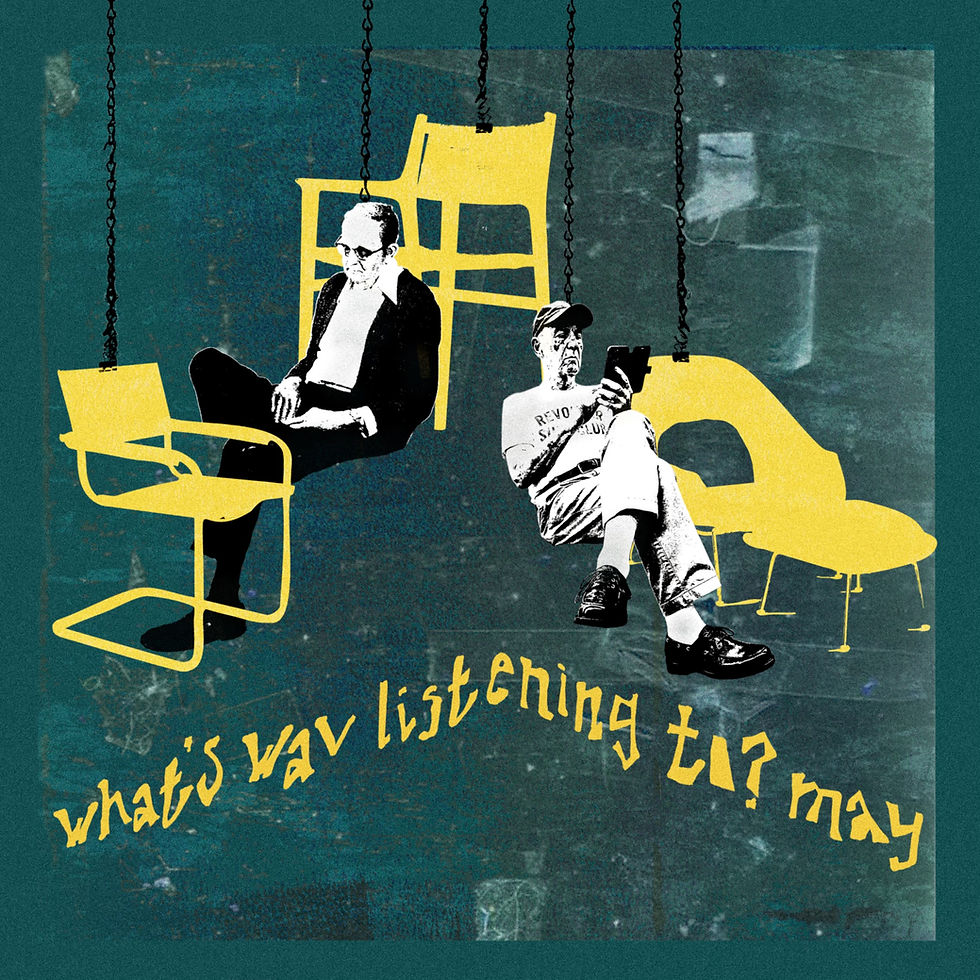
Sofia Alvarez and Emilia Pirir are writers on our Editorial Team. They conducted the interview and wrote the article. Sam Thome is our Art Director. He made the graphic. Photos used with the permission of TJ Perrin.


Comments